
Bremsmodule sind Elektronikschaltungen, die dafür sorgen, dass Ihre Loks mit Digitaldecoder auf entsprechend angeschlossenen Gleisabschnitten abbremsen.
Die im Folgenden beschriebenen Bremsmodule basieren auf dem technischen Prinzip "Bremsen bei Gleichspannung". Das ist unter den Mittelleiterfahrern auch bekannt als Märklin Bremsstrecke und bei den Zweileiterfahrern als "Brake on DC" (Bremsen bei Gleichspannung). Die im englischen gebräuchliche Abkürzung "DC" (für direct current) verwenden wir hier zur Abgrenzung beispielsweise von Bremsmodulen, die auf dem ABC-Prinzip basieren. Wenn Sie mehr zu den technischen Grundlagen wissen und verstehen wollen, lesen Sie diese Seite:
Modellbahn-Bremsmodule – Grundlagen – bogobit Bremsmodule
Das Bremsmodul speist eine Bremsspannung (negative Gleichspannung) ins Gleis ein. Der Lokdecoder erkannt das und löst den Bremsvorgang (bis zum Stillstand) aus. "Bremsen bei Gleichspannung" wird von allen aktuellen Märklin-Lokdecodern, und auch von den meisten Märklin-kompatiblen Lokdecodern anderer Hersteller unterstützt. Auch viele Lokdecoder für das DCC-Format können entsprechend konfiguriert werden, zum Teil sogar mit Polaritätserkennung, womit eine richtungsabhängige Bremswirkung erzielt wird.
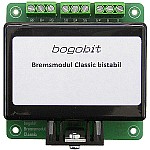
Das bogobit Bremsmodul Classic zeichnet sich durch einen besonders einfachen Gleisanschluss aus, da nur ein isolierter Mittelleiter-Abschnitt (bei Zweileiter: ein einseitig isolierter Schienen-Abschnitt) benötigt wird (d. h. die üblicherweise erforderlichen Übergangs- oder Stoppabschnitte braucht es hier nicht). Das macht die Installation besonders einfach, und ist auch ideal für die Umrüstung von Anlagen mit bisher einfachen stromlosen Abschnitten. Die Länge des isolierten Abschnitts muss nur so lang wie der Bremsweg der Lok sein. Zu diesem Zweck besitzt das Bremsmodul Classic eine eingebaute elektronische Strombegrenzung, so dass bei der Überfahrt von Trennstellen kein Kurzschluss auftritt.
 Weiter mit Details zum
bogobit Bremsmodul Classic
Weiter mit Details zum
bogobit Bremsmodul Classic
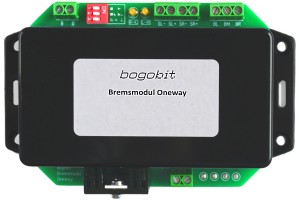
Beim Vorbild gelten Signale nur in eine Richtung, für Loks in Gegenrichtung sind sie irrelevant. Genau diesen Wunsch im Modell erfüllt das bogobit Bremsmodul Oneway. Zur Richtungserkennung muss der Bremsabschnitt zweigeteilt werden. Durch Stromsensoren in beiden Abschnitten erkennt das Bremsmodul die Fahrtrichtung und schaltet bei Bedarf alle Gleisabschnitte gleichzeitig auf Bremsspannung um. Das erste, stromverbrauchende Fahrzeug (Lok, oder z. B. beleuchteter Steuerwagen) bestimmt den Bremszeitpunkt.
Betriebsart 1 (z. B. auf freier Strecke): Das Bremsmodul wird an einem Signal mit Bremswirkung in einer Richtung verwendet.
Betriebsart 2 (z. B. im Bahnhofsgleis): Das Bremsmodul wird an zwei Signalen mit Bremswirkung in beiden Richtungen verwendet.
Weiter mit Details zum
bogobit Bremsmodul Oneway
Das bogobit Standard-Bremsmodul ist ein preisgünstiges Bremsmodul. Installation und Anschluss am Gleis sind etwas aufwändiger, es werden die – unter Mittelleiter-Fahrern als Quasi-Standard bekannten – drei Gleisabschnitte Übergangsabschnitt, Bremsabschnitt, Stoppabschnitt benötigt.
Weiter mit Details zum
bogobit Standard-Bremsmodul
Auf den folgenden Seiten finden Sie weitere Informationen:
Modellbahn-Bremsmodule – Grundlagen – bogobit Bremsmodule
FAQ – Häufige Fragen rund um die bogobit Bremsmodule.
Vergleich der verschiedenen Bremsmodule und der jeweils nötigen Gleisabschnitte.

bogobit · 2024-04-18